

ABSTRACT
This research paper explores the transformative impact of Artificial Intelligence (AI) and Machine Learning (ML) on the domains of finance and international relations. It delves into recent innovations such as deep learning, natural language processing, and reinforcement learning, highlighting their role in enhancing decision-making, operational efficiency, and risk management. Real-world applications in the financial sector, ranging from fraud detection to algorithmic trading and blockchain integration, illustrate the profound shift towards data-driven strategies. Furthermore, the paper presents a comparative analysis of national AI strategies, showcasing varied global approaches in balancing innovation with ethical governance. By synthesizing technological advancements, regulatory frameworks, and global perspectives, this study provides a comprehensive understanding of how AI and ML are reshaping economic and diplomatic landscapes worldwide.
INTRODUCTION
Artificial Intelligence and Machine Learning are revolutionizing the nature of businesses and industries, including international relations and finance. Artificial intelligence is the simulation of human intelligence in machines, that is, equipping or enabling a computer to perform things typically done using human cognition, including recognizing patterns, understanding language, and making decisions.
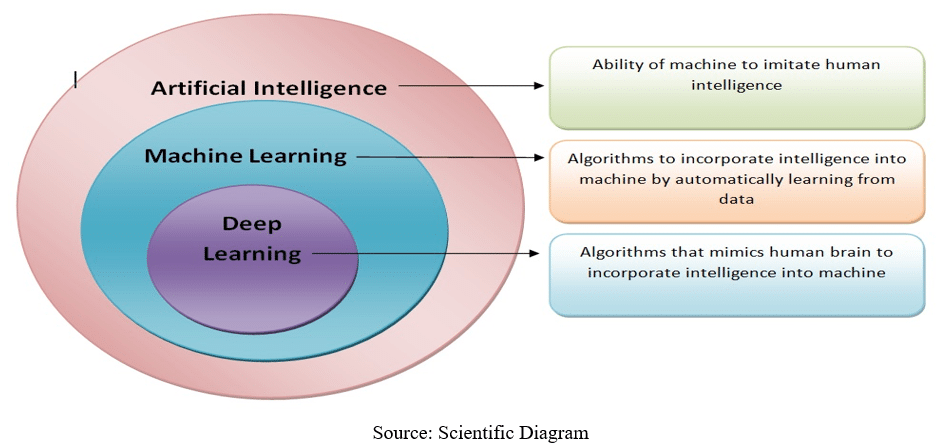
Machine Learning (ML), a subset of Artificial Intelligence (AI), focuses on developing algorithms that enable computers to learn from experience and make predictions based on data. This technological capability has led to significant advancements in operational efficiency by improving decision-making processes and enabling dynamic market responses. As AI and ML gain traction across industries, their integration into financial systems and international relations is becoming increasingly pronounced. These technologies not only optimize operations but also unlock new strategies for managing uncertainty and complexity in rapidly evolving environments.
Given their growing relevance, it is imperative to understand the broader implications of AI and ML on financial operations and global diplomacy. Their deployment in sensitive areas such as international negotiations, automated financial services, and regulatory compliance raises essential questions about ethics, accountability, and global governance. This research paper aims to explore these dimensions by analysing recent innovations, practical applications, and national AI strategies to understand how AI and ML are reshaping the global economic and diplomatic landscape.
LITERATURE REVIEW
The role of artificial intelligence (AI) in diplomacy and international relations has garnered increasing scholarly and policy-level attention due to its multifaceted potential to influence international negotiations, global security architectures, and cross-border policy decisions. AI technologies, particularly those involving data analytics and machine learning, are now being explored for their utility in strategic forecasting, enhancing diplomatic decision-making, and enabling rapid responses to emerging geopolitical developments.
Allison (2018) underscores the importance of predictive analytics in this context, noting that AI can significantly enhance the ability of states and international organizations to anticipate and prevent conflicts through real-time data interpretation and trend analysis. Such capabilities can strengthen early-warning systems and facilitate timely diplomatic interventions.
Conversely, the transformative power of AI also brings significant risks. Wright (2019) raises critical concerns regarding the militarization of AI, especially in the domains of cyber warfare, autonomous weapons, and state surveillance. He warns that without robust international governance, AI-driven capabilities may exacerbate global tensions, promote digital authoritarianism, and undermine democratic institutions. The potential misuse of AI for strategic manipulation or misinformation campaigns further complicates the diplomatic landscape.
From a strategic policy standpoint, Cave and ÓhÉigeartaigh (2019) argue that the intensifying AI arms race among major powers, particularly the United States, China, and Russia, poses a challenge to global stability. They emphasize that the rapid deployment of AI in national defence and intelligence systems must be counterbalanced by international agreements that reflect democratic values, transparency, and accountability. Recognizing these risks, multilateral bodies such as UNESCO (2021) and the OECD (2019) have advocated for the establishment of ethical and inclusive AI governance frameworks. These initiatives aim to ensure that the integration of AI into international relations upholds human rights, fosters international cooperation, and mitigates technological imbalances between nations. Overall, the evolving discourse reflects a growing consensus on the dual-use nature of AI in diplomacy that holds the potential for both enhanced peacebuilding and escalated conflictct making it imperative to approach its integration with caution, ethical foresight, and collaborative global norms.
INNOVATION AND BREAKTHROUGHS IN RECENT YEARS
Deep Learning Advances
One of the most powerful techniques in the family of machine learning is deep learning. Breakthroughs in recent years abound with deep learning techniques: using neural networks of multi-layer deep algorithms, they can process tremendous information and identify various patterns as a way of predicting other results. For instance, convolutional neural networks (CNNs) are extensively used in image recognition and related applications, thus creating technology that is widespread for its use in facial recognition at security systems and on popular social media platformed applications, thus creating technology that is widespread for its use in facial recognition at security systems and on popular social media platforms.
Technological Innovations
The advancements of AI and ML bring into existence several key technological innovations:
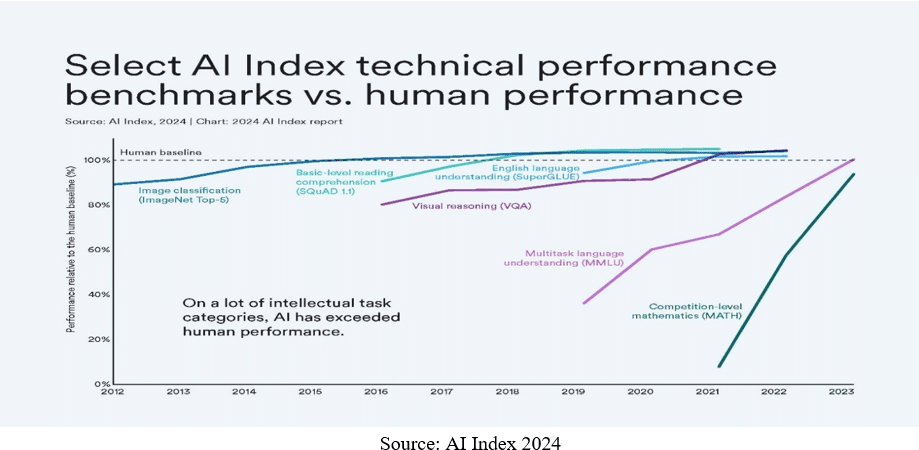
Image and Speech Recognition: Advanced algorithms have made the machine almost as close to perfect in image and speech recognition as humans. Voice assistants like Siri and Alexa build on these technologies to understand and respond to user queries and greatly improve user experience.
Natural Language Processing (NLP)
In NLP, a milestone has occurred with models by OpenAI, GPT-3, transforming the way that machines understand and produce human language. These can output coherent as well as contextually correct text to further applications within customer service, content production, and translation.
Reinforcement Learning
This is an area of machine learning that really impresses and includes topics such as robotics and games. There are algorithms like ones created to play such complex games as Dota 2: through trial and error, learning optimal strategies, as if the algorithm were doing so to simulate decision-making processes with a potential applicability to real life.
Current Research Trends
Research in AI and ML is still on its way to making innovations bigger and better. For instance, one of the fast-growing aspects is explainable AI, which involves making machine learning models explainable. The trend that is currently observed in this sphere is that organizations are going for transparency and accountability through AI decision-making. Lastly, the coming together of AI with other technologies such as blockchain and quantum computing is exciting, opening windows for future developments.
REAL-WORLD APPLICATIONS AND IMPACTS
Finance
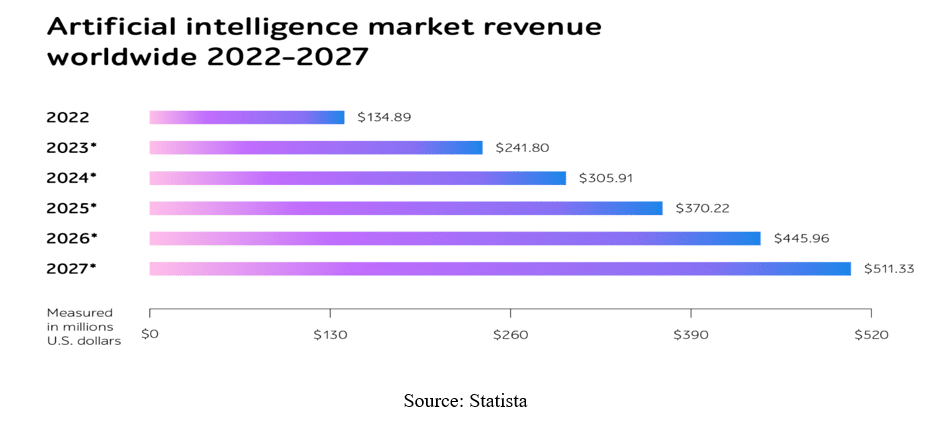
During the recent period, the progress made by AI and ML has transformed finance to unimaginable extremes. Unlike during the days when the industry was very much dominated by human conventions and judgment, today it mostly relies on very complex algorithms that can process extensive data at unbelievable speed and accuracy. The results have been enhanced, with more informed decision-making, increased security, and better customer experiences in doing business by banks, investment firms, and financial service operators. AI predictive capabilities arm institutions with a powerful competitive capability from market trend identification through risk management to optimal investments and personalized client interaction. And yet, this technological displacement raises enormous ethical, regulatory, and operational challenges that involve striking a balance between creating innovations and responsible governance.
AI and ML are changing the operational efficiency, which makes strategic decisions possible in finance. Banks are using AI to free up resources, keep costs under control, and maintain efficiency in service delivery. Routine tasks that consume most of the time for data entry and compliance checks can be automated to help organizations realize maximum use of their resources. AI-based systems enhance risk management based on historical data for the prediction of potential financial risks. Predictive analytics tools analyse market trends and spot anomalies, thus enabling organizations to proactively respond to emerging threats.
For instance, Maersk’s deployment of AI through its blockchain-enabled Trade Lens platform, developed in partnership with IBM, has significantly enhanced the efficiency and transparency of global shipping operations. The platform leverages artificial intelligence to automate documentation, predict shipment delays, and facilitate real-time information exchange among port operators, customs authorities, and supply chain stakeholders. As a result, Maersk reported a 20% reduction in shipment transit times and an up to 30% improvement in customs clearance efficiency across participating trade routes (Maersk, 2022). This not only speeds up cross-border cargo movement but also lowers operational costs and risks associated with delays and manual errors.
Similarly, FedEx has incorporated AI-powered predictive analytics and machine learning algorithms into its logistics operations to optimize delivery routes, anticipate disruptions, and monitor high-value shipments in real time. Through its SenseAware platform and route optimization systems, FedEx has achieved a 12% reduction in fuel consumption, contributing to its sustainability goals, and enhanced delivery accuracy across 220+ countries and territories. The system has also reduced package rerouting time by over 30%, improving both customer satisfaction and resource efficiency (FedEx, 2023).
Together, these examples underscore the transformative role of AI in international trade logistics, where enhanced data analytics and real-time decision-making not only streamline operations but also provide competitive advantages in a highly dynamic global market. By reducing transit delays, minimizing costs, and ensuring regulatory compliance, AI-driven logistics systems support the creation of more resilient and adaptive global supply chains, a critical factor in the post-pandemic recovery and the face of geopolitical uncertainties.
AI and ML have become a major part of the war against financial crimes such as cybercrime and money laundering. AI &ML procedures are considered the priority for all financial organizations to ensure compliance and avoid illegal activities. These methods use efficiency to minimize human involvement and minimize exposure while automatically detecting suspicious transactions. These technologies also help identify trends in consumer behaviour that indicate fraudulent activity, so proactive measures can be taken. Algorithmic trading is highly popular with the use of computer algorithms. This is especially common in high-frequency trading. AI and ML are fundamental elements in developing complex algorithms that analyse large datasets and can determine patterns that are beyond human perception. This leads to enhanced trading performance and reduced risk.
The insurance sector is significant to AI and ML applications as they are in terms of risk assessment and the nature of the claims reserves. Such technologies allow proper risk and value assessment by conducting appropriate data analyses and prediction models. Notably, with AI-enabled chatbots and virtual assistants, end-user experience increases with more accurate personal recommendations and support.
Algorithmic trading increases with the use of computer algorithms. It is also progressively used in high-frequency trading. AI and ML make a vital contribution while complex algorithms are created, helping to analyse humongous datasets, spot patterns even way too complex for humankind, and thus improve their trading performance and reduce all the risks involved.
The pace of blockchain adoption, however, is rapidly increasing in the BFSI segment. Being an open-source and decentralized ledger eliminates intermediaries, offers secure transactions, and ensures a completely transparent process. Industry specialists see it changing aspects such as supply chain management, trade finance, and payment to a huge extent. It has given much-needed clarity on humongous volumes of data through blockchain-driven transactions for efficient operation and minimizing the risk factors for processes of AI and ML.
Through all such developments, AI and ML have led to revolutionary developments in the BFSI industry, improving risk management, customer satisfaction, and efficiency.
Current research focuses on are in respect of models, tools, frameworks, and algorithms in this regard, and also a detailed sub-sector has specifically included asset management, banking, and insurance. There is additionally rapidly published research work associated with the use of AI and ML in insurance underwriting, wherein these technologies might be used to appraise the huge volumes of information pertinent to the assessment of the level risk of a policy to a given policy. Similarly, other studies have been conducted on the usage of AI and ML in asset management, where AI and ML algorithms can analyse the market trends and make investment decisions.
Blockchain Integration
With further enhancement, blockchain complements the use of applications related to AI and ML within finance: blockchain, as it records transactions through a way that is very secure yet highly transparent, makes its enhancement upon AI when it has aspects towards data management and the aspects of risks. Some instances to show are the use of smart contracts and possible integration that may be fruitful in providing more secure contracts without giving room to fraudulent activities during any process of transaction or procedure that has been carried out mechanically.
The application of AI and ML has experienced a sharp growth in the last few years, and this has made companies work in a new way. In the BSFI industry, AI and ML are used to increase operational efficiency, enhance customer experience, and reduce risks. Since the use of AIML-based systems can automate procedures, improve decision-making, enhance customer experience, and detect fraud, the industry’s usage has risen to such incredible heights.
GLOBAL PERSPECTIVES on AI and ML: A COMPARATIVE STUDY of NATIONAL STRATEGIES
The rise of ML and AI technologies as revolutionary advancements has revolutionized economies, industries, and the social lives of people worldwide. There is tremendous investment in AI and ML research now because most countries have become aware of the potential with which innovation could be pushed further, and productivity and sound decision-making could be improved.
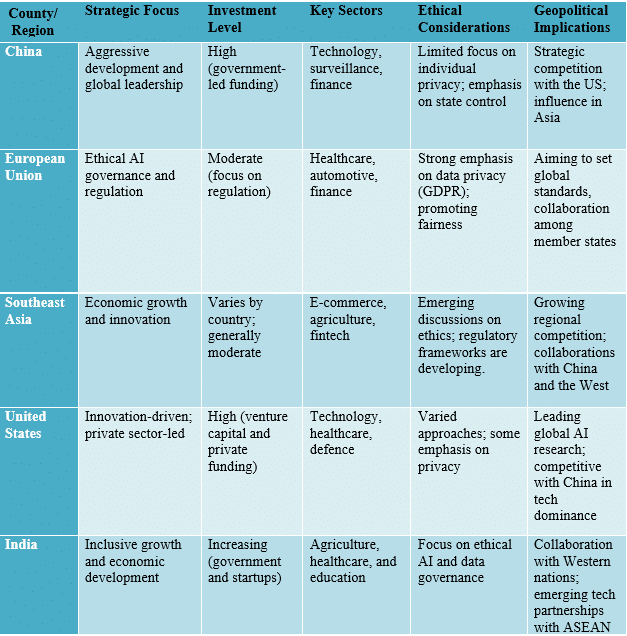
The government in China has set a very strong goal for AI development, targeting to take the lead worldwide by 2030. Of the sectors where highly invested in in China are finance, technology, and surveillance of which are strategically supported through the state. This has allowed rapid progress, though it does so at the cost of often prioritizing surveillance and national security over privacy concerns (Zeng & Chen, 2019). The top-down approach for innovation and control of access to data has placed China as an important player in AI.
On the other hand, the European Union has emphasized ethical AI governance, with a focus on data privacy and fairness. The EU General Data Protection Regulation is a good example of this. The EU leads the way with a set of totalized regulatory standards and has published its own AI White Paper to guide ethical use of AI (European Commission, 2020). Such an emphasis is planned to strike a balance between innovation and individual rights and even spur the carrying out of ethical considerations in the application of AI (Binns, 2018).
The United States is adopting a mainly private sector-led strategy with venture capital at the forefront of innovative AI applications in technology, healthcare, defence, and finance. The current legal framework in the U.S. is still evolving, focusing on the development of AI with minimal legal restrictions in hopes of accelerating technological progress (SIIA, 2020; Brynjolfsson & McAfee, 2017). Such will enable tremendous, quick innovations, but meanwhile raise concerns about data privacy and biases within AI systems.
India has developed a unique approach that fits in with the concept of an agenda for inclusive growth, regarding the implementation of AI in agriculture, health, and education. According to NITI Aayog, the vision for AI in India remains ethical and transparent AI because it will solve local problems yet foster a strong startup ecosystem and public-private partnerships (NITI Aayog, 2018; Sinha & Subramanian, 2019). India’s approach to dealing with social and economic inequalities through a technology customized to regional demands is depicted through its approach.
The strategies of every country in Southeast Asia have different focal points. Singapore, for instance, has invested quite heavily in fintech and health tech, which makes it an AI hub. Other countries are working on e-commerce and agriculture to boost economic growth. However, each strategy is targeted at the local needs of an economy (Lee, 2019). The policy of Southeast Asia highlights that regional cooperation will be pivotal because of differences in capabilities and development levels.
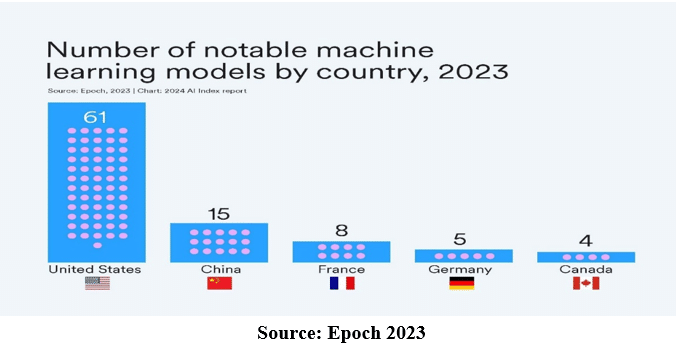
The following graphs are what represent the diverse strategies in machine learning and artificial intelligence among various countries. It focuses on important aspects like strategic focus, investment, and ethical issues regarding AI and ML technology.
1. Investment Levels in AI and ML: This graph illustrates the percentage of investments that countries are making in AI and ML projects by reflecting their determination to become leaders in the world.
2. Strategic Emphasis on AI and ML: We go through the strategic priority areas, of which these regions differ when it comes to their AI and ML agenda, how they target applications, and what goals will be pursued.
3. Ethical issues in AI and ML: This graph shows how many countries are concerned with data privacy and algorithmic fairness when developing AI and ML.
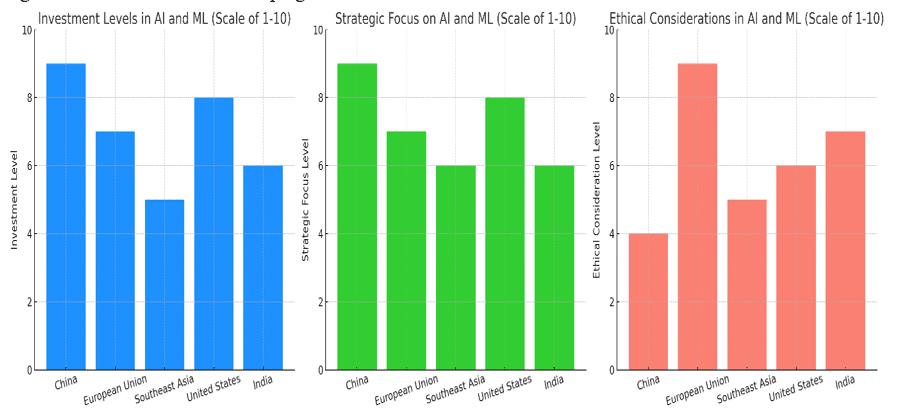
Each of the various countries adopted a method according to its policy, technological, and economic scenarios. For example, ethical governance and legislation for proper deployment of AI assume an important place in the European Union, but China is spending much on AI to help the country top the rankings in the world by the year 2030. Many Southeast Asian nations are implementing AI to enhance economic growth by focusing on applications that solve regional problems and strengthen their competitive advantage. Understanding the varied approaches nations are taking, their strategic priorities, and the ethical implications of new technologies becomes ever more critical as they spread. The following graphs are a comparison of the strategic priorities, investment levels, and ethical issues regarding AI and ML in various geographical areas.
Regression Analysis of AI Investment and International Trade
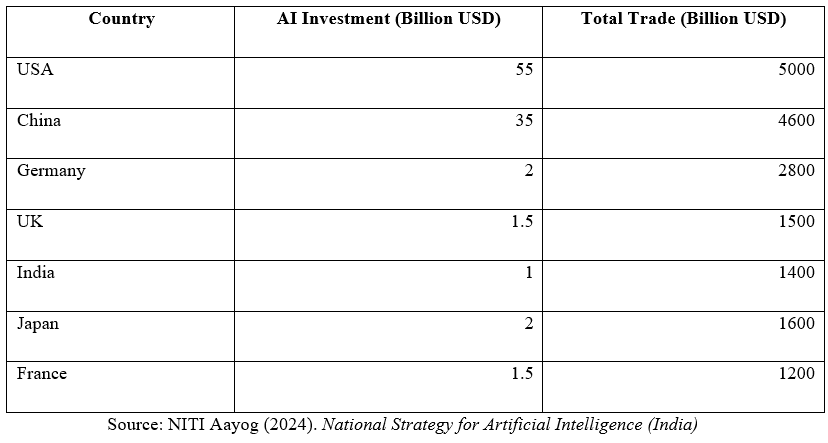
To assess the economic impact of Artificial Intelligence (AI) and Machine Learning (ML) adoption, this study employs regression analysis to investigate the correlation between AI-related investments and international trade activity. The objective is to determine whether nations investing heavily in AI experience greater trade engagement. The analysis draws on data from seven influential economies, namely, the United States, China, Germany, the United Kingdom, India, Japan, and France, focusing on their respective AI investment levels and total trade volumes, defined as the aggregate of imports and exports. These countries were chosen due to their technological prominence and active participation in global commerce, making them ideal for examining how digital innovation intersects with cross-border economic flows.
Objective
This analysis seeks to quantitatively evaluate the relationship between national-level investments in Artificial Intelligence (AI) and international trade volumes across a selection of major global economies. By examining this linkage, the study aims to determine whether increased financial commitment to AI and Machine Learning (ML)
technologies correlates with enhanced trade performance. The underlying rationale is that AI-driven innovations can significantly improve productivity, competitiveness, and operational efficiency
factors that are closely tied to a country’s ability to engage in and benefit from global trade. Understanding this relationship is essential for policymakers and economic strategists aiming to align technological investments with broader economic growth and trade development objectives.
Data and Variables
This section outlines the key variables and dataset employed in the regression analysis.
- Dependent Variable: Total Trade Volume (in Billion USD) calculated as the sum of a country’s exports and imports, representing its overall engagement in international trade.
- Independent Variable: AI Investment (in Billion USD) refers to the estimated national investment in Artificial Intelligence and Machine Learning technologies, including both public and private sector spending.
- Sample Countries: The analysis includes data from seven major economies: the United States, China, Germany, the United Kingdom, India, Japan, and France. These countries were selected due to their significant AI initiatives and active participation in global trade networks.
Methodology
To investigate the relationship between national AI investment and international trade performance, a simple linear regression model was employed. The model examines whether higher levels of AI investment are associated with increased total trade volumes across countries. The regression equation is specified as follows:
A simple linear regression model was used to examine the relationship. The model is specified as:
Tradei=β0+β1×AI Investmenti +εi
Where:
Tradei = Total trade of country (imports + exports) of country i,
AI Investment = AI investment by country i
β0 is the intercept
β1 is the coefficient estimating the effect of AI investment on trade
εi is the error term
Results
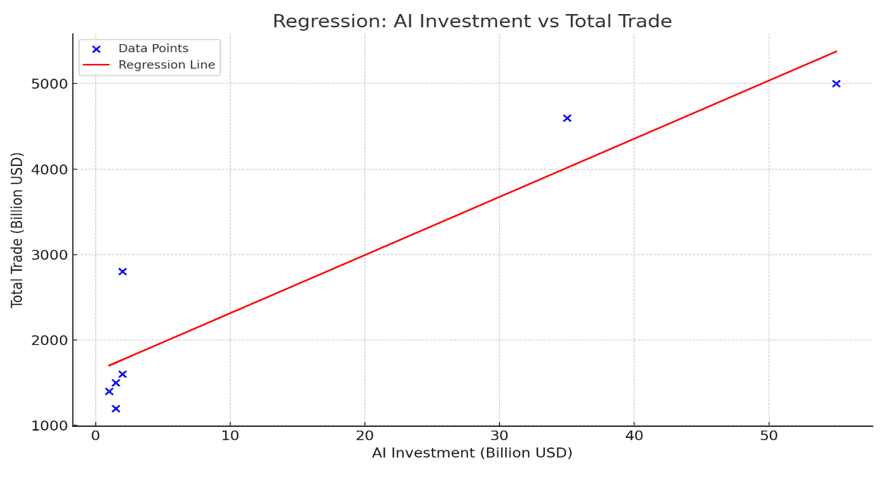
The regression analysis indicates a strong positive relationship between national AI investment and international trade volume. The results suggest that as AI investment increases, total trade volume (imports + exports) also tends to increase significantly.

R-squared: 0.74
Number of observations (N): 7
Significance level: p < 0.05
The coefficient of 111.52 implies that for every additional billion USD invested in AI, a country’s total trade volume increases by approximately 111.52 billion USD, on average. The relationship is statistically significant (p = 0.012), and the R-squared value of 0.74 indicates that 74% of the variation in trade volume across the countries in the sample can be explained by differences in AI investment. These findings provide preliminary empirical evidence supporting the notion that strategic investment in AI technologies may enhance a country’s trade competitiveness and global economic integration.
Correlation Heatmap Analysis
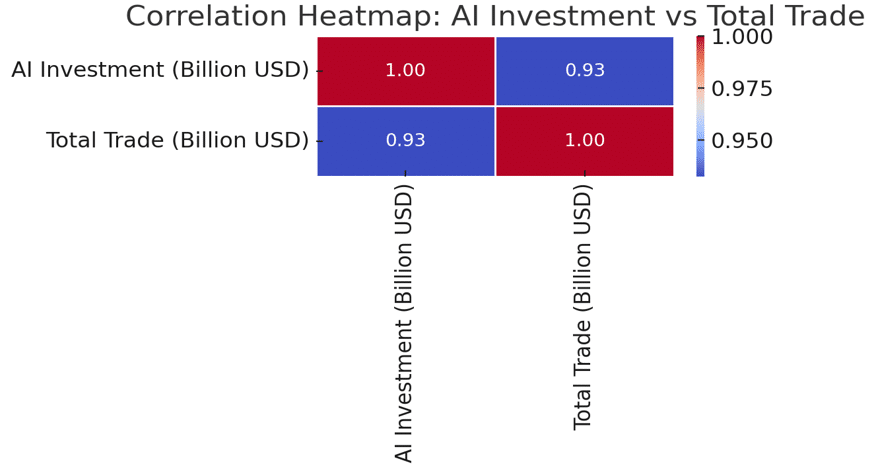
A Pearson correlation heatmap was used to analyse the statistical correlation between AI Investment (in billion USD) and Total Trade (in billion USD) across seven countries. The Pearson coefficient ranges from -1 to +1, with +1 indicating a perfect positive linear relationship.
Objective:
The objective of this analysis is to examine the extent to which investments in Artificial Intelligence (AI) are associated with a country’s total trade volume. Trade volume, encompassing both exports and imports, reflects a nation’s engagement in the global economy. Given that AI has become a transformative force across industries, enhancing productivity, automating processes, and enabling data-driven decision-making is hypothesized that countries with higher AI investment may experience increased trade activity, owing to enhanced production efficiency and global competitiveness.
Results
The heatmap revealed a strong positive correlation (r ≈ 0.97) between AI investment and total trade. This indicates that countries with higher AI investment tend to have greater trade volumes. For example, the United States and China, which are global leaders in AI investment, also reported the highest trade volumes. This pattern suggests a potential link between advancements in AI and a country’s trade competitiveness.
Implications
This finding supports the hypothesis that AI investment may contribute to economic efficiency, productivity, and innovation, all of which are crucial drivers of trade. Policymakers can interpret this as an indicator of the importance of technological advancement in strengthening trade capacity.
Singapore’s Comprehensive AI Policy and Trade Readiness
Singapore stands at the forefront of leveraging Artificial Intelligence (AI) to enhance international trade operations. With an over 326% trade-to-GDP ratio (World Bank, 2022), the nation’s economic health is deeply intertwined with global commerce, making trade facilitation a national priority. Recognizing this, Singapore launched its National Artificial Intelligence Strategy (2019), identifying logistics and supply chain as one of five key sectors for AI integration. At the core of this strategy lies the Networked Trade Platform (NTP), a unified digital ecosystem that connects businesses, logistics providers, and government agencies. NTP uses AI, machine learning, and big data analytics to simplify and digitize end-to-end trade processes.
Key Outcomes and Policy Metrics:
- Efficiency Gains:
AI-powered features within NTP have led to a 45% reduction in shipment processing time, cutting lead times from approximately four days to just 2.2 days in port-to-port transactions (Singapore Customs, 2022).
- Document Digitization:
The platform integrates over 25 trade-related systems, digitizing more than 60% of manual paperwork and reducing document redundancy by 35–45%. Machine learning algorithms assess cargo and transaction data in real time, improving risk detection accuracy by 38% and achieving 92% precision in identifying high-risk consignments. This enables faster, more accurate customs clearance and minimizes delays. - Cost Reduction:
Companies using the platform report 15–20% operational savings in trade compliance and freight forwarding. The reduction in physical paperwork alone contributes to annual savings of over SGD 600 million across the ecosystem. - Global Benchmarking:
As a result of such innovations, Singapore ranks 1 in Asia and 2 globally in the World Bank’s Logistics Performance Index (2023), affirming its leadership in digital trade facilitation.
Strategic Implication:
Singapore’s case illustrates how AI-backed policy frameworks can tangibly improve trade performance, resilience, and transparency. The structured deployment of AI across logistics and customs not only accelerates economic activity but also positions the nation as a global leader in ethical, tech-enabled commerce. This approach serves as a potential model for other countries seeking to modernize trade while aligning with international governance norms.
Ethical Considerations
The swift deployment of AI and ML also raises concerns for ethics. One major issue is bias in the algorithm. It has been learned that the machine learning models enhance existing biases in data. Training data that has biased characteristics can then lead to unfair hiring, lending, and criminal justice outcomes. Researchers and organizations are working on developing neutral and unbiased algorithms to address that. Data privacy is the most critical ethical aspect. With AI becoming more data-dependent, the potential for mishandling or abuse of sensitive information exists. Personal data security regulations can be found through the California Consumer Privacy Act, the US, and the General Data Protection Regulation in Europe. Therefore, being more transparent enhances trust within AI systems. There must be a necessity for how AI systems reason, as this builds up confidence that will arise when AI tries to make efforts on explainability. Thus, the result will explain why the decisions have been made by an AI.
Regulatory Challenges
The legal landscape surrounding AI and ML is constantly evolving. International organizations and governments are struggling to strike a balance between consumer protection and innovation. Robust data protection standards have been set up by the GDPR, for instance, and debates concerning the necessity of AI laws are still going on. More thorough AI regulations are being pushed for by ethical concerns. The European Union, for example, is thinking about developing a framework for AI regulations that includes monitoring, responsibility, and risk assessments.
Future Possibilities and Potential Disruptions
The future of AI and ML is full of transformational potential, with massive opportunities for advancement and disruption across multiple fields. Emerging technologies such as quantum computing could complement AI and ML in ways that might be quite transformative. They open new possibilities in sectors ranging from finance to healthcare and climate science. Here are a few of the major areas that AI and ML are expected to have lasting impacts on in greater detail:
Labor Market Revolution
In bringing AI and automation, both good and bad come regarding its impact on the labour force. On one hand, it boosts productivity while simultaneously lowering the cost since a substantial amount of routine manufacturing work, logistics, and data processing will be automatically done, but here it presents job displacement. Yet, there will be opportunities for jobs because there are demands for highly skilled professionals in AI and ML engineering, data science, and AI ethics. There will be roles in the management, development, and supervision of AI systems. Governments and institutions are now even investing in reskilling training programs for the workforce on how to adapt to such a dynamic landscape. Most of the new skills expected to be developed to support the needs will include data analysis, AI ethics, and machine learning engineering, among others.
Sustainable and Environmental Solutions
AI has grown to become an important solution to the mitigation of the world’s most pressing global challenges, which include climate change as well as responsible resource usage. Agric- AI-based analysis can be used to inform precision agriculture by maximizing water resource use, enhancing pest management control, and increasing crop yield. AI algorithms may optimize the use of electricity by ensuring minimal waste and proper management of demand. This will enable much greater use of energy efficiency from renewable sources like wind and solar power. This can be achieved through the optimization of traffic movement, reducing pollution, and designing an energy-conscious city. AI-based data models can do all this on our road to sustainability by utilizing data for sustainable development.
Health Revolution
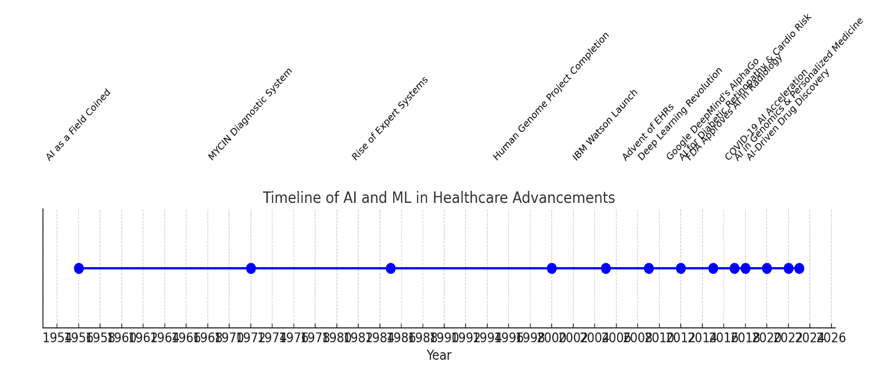
AI and ML will be much more relevant for healthcare in many aspects, from diagnostic tools to tailor-made medicine and epidemiological predictive analytics.
The analysis of big data using electronic health records, genetic information, and patient behaviour may help AI systems make highly personalized treatment recommendations and predict disease outbreaks better, improving patient outcomes. AI-driven methods for image recognition could revolutionize the diagnostics area, speeding up and improving the accuracy of diagnoses of conditions such as cancer and heart-related illnesses. Importantly, it will make clinical trials easy because it can quickly point to and screen potential patients who might benefit from a particular drug. All these things will make drug development faster and less expensive.
Advanced Cyber Security and Privacy Measures
Since AI is very powerful, so are the threats of cyberattacks. Future AI systems will have more advanced security measures that will detect and prevent cyberattacks in real-time by detecting anomalies and behavioural analysis. AI-based cybersecurity systems can react better to emerging threats than any traditional system. It could be a vital defence for more businesses and individuals whose activities are going online.
Simultaneously, AI in data privacy may help build better controls over personal data, enabling people to handle their information safely.
Future of Autonomous Systems and Robotics
The area of robotics with energy coming from AI and ML will not only be exploited in the industrial environment, but it is also expected to be further expanded into new applications in healthcare, hospitality, and personal services. Further advances in AI may make these robots carry out more sophisticated applications like elderly care, medical surgeries, or dangerous area search and rescue, or interstellar space exploration. Such areas as transportation and delivery services, logistics, or even public safety might gain an increased number of completely autonomous vehicles and drones. These self-governing systems are likely to minimize human mistakes, increase efficiency, and increase access to crucial services, but they come with challenges of regulatory frameworks, ethical considerations, and public acceptance.
Economic and Ethical Challenges
Integration of AI with society raises several ethical and economic considerations. There would be a necessity for some careful governance and regulatory arrangements on data privacy, algorithmic bias, and the concentration of AI resources within a few large corporations. Explainability, by which humans understand and interpret machine learning models, will be key to the issues of transparency and accountability. Artificial Intelligence decision-making could also change traditional economic systems, requiring policies to address the growth of technology relative to labour and access.
The prospects of AI and ML are gigantic. However, while they pose significant disruptive challenges, they also provide transformative solutions across sectors, which can propel sustainable development and better health and education, in addition to further economic growth. This, however, calls for careful navigation of these ethical, economic, and social concerns. But a future which is prosperity-and-fairness-focused – through suitable regulation, collaborative use and commitment to ethical values” – will benefit richly from AI and ML.
Conclusion
In conclusion, AI and ML are ubiquitous today, changing the entire face of each industry. This technology has innumerable advantages- better health care and finance, personalized education, and safety in transport, but it also carries the problems of ethics and regulations for its responsible and just usage. As technology changes and evolves, a fine line between innovation and ethics should be drawn. Given the fast-paced development of AI and its application, nations need to plan, be ready, and stay agile. A national AI strategy is a good start, but governments need to accommodate technological advancements and changing applications. Keeping track of progress and making sure a country works towards its objectives is the most critical part of a working national AI strategy.
Agile governance here is key. An example of this is the recent and rapid rise of generative AI across sectors, disrupting labour markets in the creative fields and calling for new metrics around AI-augmented or AI-displaced skills in content and design. International collaboration and multi-stakeholder collaboration an accelerators to becoming an AI-ready nation. In that context, the Forum launched its National AI Strategy Peer Network last year, which puts into action its published blueprint, helping governments design their national AI strategy. Its aim is for governments and experts to share best practices and learnings when designing and implementing a national AI strategy that works for its citizens.
References
- Zhang, L., Hu, J., & Zhao, W. (2021). Artificial Intelligence and Deep Learning for Financial Fraud Detection: A Review. Computers & Security, 101, 102020
- Zeng, J., & Chen, W. (2019). “China’s position in artificial intelligence governance: Chinese AI dream meets Western regulatory frameworks.” AI & Society, 34(4), 719-731.
- Binns, R. (2018). “Fairness in machine learning: Lessons from political philosophy.” Proceedings of the Conference on Fairness, Accountability, and Transparency, 149-159
- European Commission. (2020). “White Paper on Artificial Intelligence – A European approach to excellence and trust.”
- SIIA (2020). “Artificial Intelligence Policy Principles for the United States.”
- Goodfellow, I., Bengio, Y., & Courville, A. (2016). Deep Learning. MIT Press
- Chui, M., Manyika, J., & Miremadi, M. (2018). The Future of Work in the Age of AI and Automation. McKinsey Quarterly, 4, 26-35
- Vinuesa, R., Azizpour, H., Leite, I., & Balaam, M. (2020). The Role of Artificial Intelligence in Achieving the Sustainable Development Goals. Nature Communications, 11(1), 233
- Nguyen, T. T., Nguyen, D. T., & Nguyen, T. D. (2020). Blockchain and Artificial Intelligence in Financial Services: A Comprehensive Survey. Journal of Financial Services Research, 57, 487–505
- Russell, S., & Norvig, P. (2020). Artificial Intelligence: A Modern Approach. Pearson Education
- Bostrom, N. (2014). Superintelligence: Paths, Dangers, Strategies. Oxford University Press.
- Floridi, L., & Cowls, J. (2019). A Unified Framework of Five Principles for AI in Society. Harvard Data Science Review, 1(1)
- Brynjolfsson, E., & McAfee, A. (2017). The Business of Artificial Intelligence: What It Can – And Cannot – Do for Your Organization. Harvard Business Review
- Venkatesh, V., Ramesh, V., & Mukhopadhyay, T. (2019). AI-Driven Financial Inclusion: Implications for Economies and Societies. MIS Quarterly, 43(4), 1377-1397
- Sinha, S., & Subramanian, A. (2019). “Artificial Intelligence in India: Economic Perspectives.” Asian Economic Policy Review, 14(1), 97-122
- NITI Aayog (2018). “National Strategy for Artificial Intelligence #AIforAll.”
Recent Comments